Παρασκευή 3 Νοεμβρίου 2017

U.S.A.'s interesting latest news

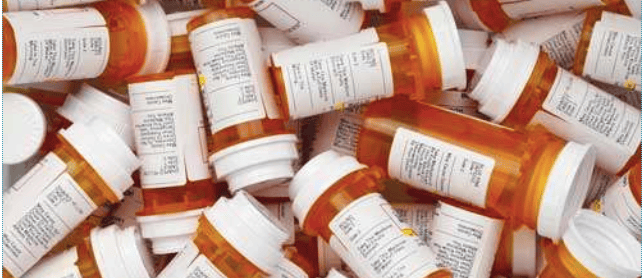
a pile of prescription pill bottles

Fighting Opioid Abuse in the U.S.

Opioid abuse continues to rise in the U.S. AmeriCorps and Senior Corps are working in communities around the country to get people the help they need. Their members work with nonprofit, faith-based, and community organizations to expand the reach and impact of substance abuse education, prevention, and recovery efforts.
Find a Program Near You

 Parent holds hands with a child. Link goes to USAGov's health page.
Education icon. Link goes to CDC's milestone tracker app page.
CDC's Milestone Tracker App
Track your child’s milestones with the CDC’s easy-to-use illustrated milestone tracker app. Get tips and check out photos or videos in the app to see what each milestone looks like in your child's development. 
Health icon. Link goes to NIH's teen driving page.
Prevent Your Teen From Distracted Driving
Distracted driving is the number one cause of car accidents in the U.S. While unexpected things can happen when driving, learn what you can do to help your teen develop good driving habits.
Money icon. Link goes to MyCreditUnion's Hit the Road game.
Hit the Road: Financial Adventure Game
Similar to The Oregon Trail game, MyCreditUnion.gov's “Hit the Road” is a fun, interactive platform aimed at teaching money management to kids. Challenge them to save and spend money wisely through a virtual road trip across the country, available in both English and Spanish.

Pueblo.GPO.gov
National Diabetes Awareness Month
Glucose Meter

Your Glucose Meter

Learn about the different types of Glucose Meters available to help you manage your medications.
Order a FREE copy of Your Your Glucose Meter Today!
Talk to Your Doctor About Diabetic Medications

Diabetes Medicines

Use this guide to help you talk to your doctor, nurse or pharmacist about the kind of medicine that is right for you. 
Order a FREE copy of Diabetes Medicines Today!
Consumer Action Handbook
Be a Smart Consumer

Consumer Action Handbook


Federal Trade Commission staff submitted a comment to the Department of Veterans Affairs (VA) in support of its proposed rule that would clarify that VA health care practitioners may provide telehealth services to beneficiaries notwithstanding any contrary state licensing laws, rules, or requirements.
Responding to the VA’s request for public comments, staff of the FTC’s Office of Policy Planning and its Bureaus of Economics and Competition stated that the proposed rule, Authority of Health Care Providers to Practice Telehealth, would ensure that VA telehealth practitioners may provide services to or from non-federal sites, such as a home, regardless of whether the practitioner is licensed in the state where the patient is located.
FTC staff believe that the proposed rule would likely increase access to telehealth services, increase the supply of telehealth providers, increase the range of choices available to patients, improve health care outcomes, and reduce the VA’s health care costs, thereby benefiting veterans, especially those in underserved areas or who are unable to travel. The VA’s rulemaking would also send an important signal to non-VA health care providers, state legislatures, employers, patients, and others regarding the tremendous potential of telehealth to promote competition and improve access to care.
The Commission vote to issue the staff comment was 2-0. It was sent to the Director, Regulation Policy and Management, Department of Veterans Affairs on November 1, 2017. (FTC File No. V180001; the staff contact is Karen A. Goldman, Office of Policy Planning, 202-326-2574).FTC Staff Seeks Empirical Research and Public Comments Regarding Impact of Certificates of Public Advantage

Federal Trade Commission staff has issued a public notice encouraging academic and industry research on the impact of certificates of public advantage (COPA) on prices, quality, access, and innovation for healthcare services. The notice also seeks public comments regarding the benefits or harms that have resulted from COPAs or other state-based regulatory approaches intended to control healthcare prices and improve quality.
Staff of the FTC’s Office of Policy Planning, Bureau of Economics, and Bureau of Competition seek this information to enhance their understanding of COPAs, and anticipate hosting a public workshop on this topic in the fall of 2018.
Since the 1990s, several states have passed COPA laws and regulations intended to permit healthcare providers to enter into cooperative agreements that might otherwise be subject to antitrust scrutiny. The goal of such COPA laws generally is to reduce “unnecessary” duplication of healthcare resources and control healthcare costs. In recent years, providers have claimed that these cooperative agreements would provide efficiencies to enable them to participate in new healthcare delivery and payment models. COPA laws vary by state, but generally purport to immunize mergers and other conduct from antitrust laws if the state determines that the likely benefits of the COPA outweigh any disadvantages attributable to reduced competition.
While affirming that the antitrust laws do not stand in the way of beneficial collaboration among healthcare providers, FTC staff has issued several advocacy comments raising concerns about whether COPA regulations actually achieve the states’ intended policy goals, and in some instances has recommended the denial of COPA applications. FTC staff is not aware of any empirical evidence demonstrating that COPA statutes and regulations produce better results for consumers than market-based competition, but recognizes that more empirical work on the impact of COPAs could provide benefits to policymakers considering these important issues.
FTC staff’s public notice is intended to facilitate discussion about ways to study COPAs, and to encourage empirical research that can inform future policy development. FTC staff invites public comment from healthcare providers, payers, consumers, state officials, policy experts, academics, economists, and other interested parties. Suggested topics for comment and instructions for filing public comments are included in the notice.
(FTC COPA Assessment, Project No. P181200; the staff contact is Stephanie Wilkinson, Office of Policy Planning, 202-326-2084)
The Federal Trade Commission develops policy initiatives on issues that affect competition, consumers, and the U.S. economy. Like the FTC on Facebook, follow us on Twitter, read our blogs, and subscribe to press rel
Reverse-payment settlements decline in second year since Supreme Court decision
The number of reverse-payment patent settlements entered into by pharmaceutical companies in fiscal year 2015 declined from fiscal year 2014, marking a second annual decrease in such settlements, according to a new FTC staff report.
The report summarized data on patent settlements filed with the FTC and the Department of Justice during FY 2015 under the Medicare Modernization Act of 2003. This is the Bureau of Competition’s second annual snapshot of such deals since FTC v. Actavis, in which the Supreme Court held that a branded drug manufacturer’s reverse payment to a generic competitor to settle patent litigation can violate the antitrust laws.  Generic drugs often cost less than brand drugs, helping to make medicines affordable for millions of American consumers and to keep health care costs down.
“While the number of reverse-payment settlements has declined in FY 2014 and FY 2015, Bureau of Competition staff continues to review each patent settlement it receives to identify potentially anticompetitive agreements,” said FTC Acting Chairman Maureen K. Ohlhausen. “More competition from less expensive generic drugs will tend to lower both drug prices and healthcare costs overall.”
According to the report, there were 14 potentially anticompetitive patent settlement deals in FY 2015, down from 21 identified in the FY 2014 report. Moreover, excluding settlement in which the only compensation is the payment of less than $7 million in litigation fees, only five settlements in FY 2015 contained both compensation to the generic and a restriction on generic entry.
The 14 reverse-payment settlements reported by pharmaceutical companies in FY 2015 involved 11 different branded pharmaceutical products with combined annual U.S. sales of approximately $4.6 billion.
Of these 14  settlements with explicit compensation to the generic and a restriction on generic entry, seven involved generics that were so-called “first filers.” First filers are the companies that were the first to seek FDA approval to market a generic version of the branded drug, and, at the time of the settlement, were eligible to market the generic product for 180 days without competition from other non-first filing generics. Under FDA regulations, until a first filer enters the market, other generic manufacturers cannot enter.
 Finally, the total number of settlements filed with the FTC increased slightly from 160 in FY 2014 to 170 in FY 2015, causing the proportion of potentially anticompetitive settlements—as a percentage of the total number of settlements filed with the FTC—to decline to the lowest level since FY 2004.
Defendants will surrender at least $9 million in assets
The operators of a Chicago-area fake debt collection scheme have been banned from the debt collection business and from selling debt portfolios under settlements with the Federal Trade Commission and the Illinois Attorney General. The settlements also require them to surrender assets totaling at least $9 million, which will be returned to consumers.
The charges brought by the agencies in March 2016 were part of Operation Collection Protection, an ongoing federal-state-local crackdown on deceptive and abusive collection practices. A federal court had temporarily halted the scheme pending resolution of the case.
According to the FTC, the defendants used names such as Stark Law, Stark Recovery, and Capital Harris Miller to target people who had obtained or applied for payday or other short-term loans. Since 2015, according to the FTC’s complaint, they pretended to be a law firm with authority to sue and obtain substantial judgments against delinquent consumers. They also allegedly provided bogus payday loan debt portfolios to other debt buyers, who then tried to collect the fake debts.
In addition to banning the defendants from the debt collection business and from selling debt portfolios, the settlement orders prohibit them from misrepresenting financial products and services, profiting from customers’ personal information collected as part of the challenged practices, and failing to dispose of such information properly.
Each order imposes a judgment of more than $47 million, which will be partially suspended once the defendants have surrendered identified assets valued at more than $9 million. Hirsh Mohindra will give up certain bank and investment accounts, his home and rental properties. His brother, Gaurav Mohindra, will surrender $85,000, a one-kilogram gold bar, certain bank accounts, and his interest in a condominium. Preetesh Patel will give up $41,000 and certain bank and investment accounts. The full judgment will become due immediately if the defendants are found to have misrepresented their financial condition.
The Commission vote approving the proposed stipulated orders was 2-0. The U.S. District Court for the Northern District of Illinois, Eastern Division, entered the orders on October 27, 2017.
NOTE: Stipulated final orders have the force of law when approved and signed by the District Court judge.
The Federal Trade Commission has released its draft Strategic Plan for Fiscal Years 2018 to 2022 for public review and comment, as required under the GPRA Modernization Act of 2010, using guidance issued by the Office of Management and Budget.  Every four years, government agencies are required to prepare and submit an updated strategic plan covering activities for at least the following five years. The FTC’s last updated strategic plan was prepared in FY 2013.
This plan presents strategic goals and objectives for the next five years. It details how the plan will be implemented in the areas of consumer protection, maintaining competition, and organizational performance. The plan also explains external factors affecting achievement of the goals, as well as evaluation and research efforts.
Public comments on the draft pan may be submitted until Dec. 3, 2017. (The staff contact is Chris Bryan, Financial Management Office, 202-326-2005.)
The Federal Trade Commission works to promote competition, and protect and educate consumers. You can learn more about consumer topics and file a consumer complaint online or by calling 1-877-FTC-HELP (382-4357).  Like the FTC on Facebook, follow us on Twitter, read our blogs and subscribe to press releases for the latest FTC news and resources.

Δεν υπάρχουν σχόλια:

Δημοσίευση σχολίου