Τετάρτη 29 Μαρτίου 2017

U.S.A.'s interesting latest

Logo_Kids.png
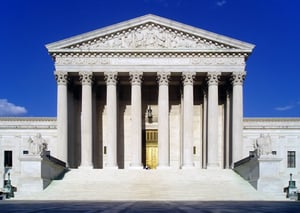
A picture of the Supreme Court. Link takes you to Kids.gov's Supreme Court infographic.Supreme Court Infographic
Learn the ins and outs of the Supreme Court, and how it works with this free printable infographic. Discover how someone would join the court, what the judges do, and how many cases the court hears in a year with this infographic and lesson plan. 
Screen shot of Toxinvaders. Link takes you to apple store to download mobile game Toxinvaders by the National Institutes of Health.
Game: Save the World from Toxins
Save the world from toxic chemicals in this fun, free interactive game call TOnXinvaders created by the National Library of Medicine. 
A girl watches a show on her mobile device. Link takes you to PBS' page on TV and Math learning.
Learning Math While Watching TV
Some TV shows can help boost children academically. Learn how to spot the best combinations of information and entertainment with these tips
A rooftop garden is shown on top of a building. The link takes you to ASLA's page of green roofs.
The Roof is Growing
Using an interactive program and a workbook, students gather facts about green roofs. Then, they apply their knowledge by preparing a case for building a green roof.
Brought to you by USAgovKids.gov is the official kids' portal for the U.S. government. We connect teachers, kids and parents to government, schools and educational organizations' information and services.

FTC@100 Banner
Public forum to examine the consumer costs and benefits of current regulations, the potential impact of new technology, and barriers to access
The Federal Trade Commission today announced the preliminary agenda for Now Hear This: Competition, Innovation, and Consumer Protection Issues in Hearing Health Care, a workshop that will explore competition, innovation, and consumer protection issues raised by hearing health and technology.
The workshop, which is free and open to the public, will take place in Washington, D.C. on April 18, 2017 and will include opening remarks from FTC Acting Chairman Maureen K. Ohlhausen.
Discussion topics for researchers, health care providers, industry representatives, consumer representatives, policymakers and others will include:
  • Consumer Information and Search Costs
  • Innovations in Hearing Health Technology
  • Innovations in Hearing Health Care Delivery
  • The Costs and Benefits of Regulation
A final agenda for the workshop, including panelists, will be released prior to the workshop.
The Federal Trade Commission works to promote competition, and protect and educate consumers. You can learn more about consumer topics and file a consumer complaint online or by calling 1-877-FTC-HELP (382-4357). Like the FTC on Facebook, follow us on Twitter, read our blogs and subscribe to press releases for the latest FTC news and resources.
The Federal Trade Commission released the agency’s 2016 Annual Highlights, which demonstrate the agency’s ongoing efforts to protect consumers and promote competition over the past calendar year, and include some of the Comission’s biggest successes to date.
“2016 was a historic year for the FTC. We obtained almost $12 billion in redress for consumers, and took action in more than a dozen merger cases to preserve competition,” Acting Chairman Ohlhausen said. “The Commission’s enforcement, policy and consumer and business education work shows our strong commitment to protecting consumers and promoting competition and innovation.”
The agency’s Enforcement Highlights address its key legal actions across many sectors, including health care, technology and other consumer products and services. The Commission continued to promote competition through its merger challenges and anticompetitive conduct cases. Most notably, the Commission successfully blocked three mergers, preserving competition in the market for office supplies sold to large business customers and in two local markets for hospital services. The Commission also brought two cases against companies for using unlawful means to maintain a monopoly, increasing consumer prices, and limiting access and innovation. On the consumer protection side, the Commission obtained the largest false advertising settlement in its history with Volkswagen Group of America and secured a historic settlement with Herbalife that required the company to fundamentally restructure its business and pay $200 million to compensate consumers who lost money. Privacy and data security continued to be a high priority for the agency, particularly in the mobile marketplace. For example, the agency alleged that digital advertising company Turn deceived consumers by tracking them online and through their mobile apps, even after consumers took steps to opt out of such tracking.
On the policy front, the FTC filed eight amicus briefs on topics such as pharmaceutical markets, reverse payments and the Fair Credit Reporting Act. Staff conducted 20 workshops and conferences on a range of topics including state regulation of auto sales, solar distribution generation, security for startup businesses and a number of tech-driven workshops in its Fall Technology Series. The Commission and staff also published 19 reports on topics including sharing economy platforms, big data and fraud.
Finally, the FTC’s Education Highlights acknowledge the agency’s work to help businesses understand their rights and legal responsibilities, and inform people about ways to avoid fraud and deceptive business practices. In addition to the many educational products the agency released in 2016, the FTC published more than 30 blog posts through its Competition Matters blog on topics like merger remedies and antitrust laws in job markets, and more than 140 blog posts for business people and attorneys. The FTC also published almost 200 blog posts for consumers in English and more than 140 blog posts for consumers in Spanish on topics including scams pushing people to pay with iTunes gift cards and IRS scams. The Commission also unveiled its free mobile-friendly financial readiness tool at Military.Consumer.gov, which helps members of the military community navigate personal financial decisions in light of the unique challenges they face, such as frequent relocations and deployment.
More statistics are available in the Stats & Data 2016 infographic. Archives of past FTC Annual Highlights and Reports are also available online.
The Federal Trade Commission works to promote competition, and protect and educate consumers. You can learn more about consumer topics and file a consumer complaint online or by calling 1-877-FTC-HELP (382-4357). Like the FTC on Facebook, follow us on Twitter, read our blogs and subscribe to press releases for the latest FTC news and resources.
The Federal Trade Commission is mailing 974 checks totaling more than $535,000 to businesses and nonprofit organizations that lost money to the Fair Guide business directory scheme, which tricked them into paying for online directory listings they didn’t want. As a result of the FTC’s action, the company and its principals were banned from the business directory business.
Organizations that lost money are getting back approximately 24 percent of their loss, an average of $549.37. Recipients should deposit or cash checks within 60 days. The FTC never requires people to pay money or provide account information to cash refund checks.
People who have questions about the case can contact the refund administrator, Rust Consulting, Inc., at 877-657-8808.
To learn more about the FTC’s refund program, visit www.ftc.gov/refunds.
The Federal Trade Commission works to promote competition, and protect and educate consumers. You can learn more about consumer topics and file a consumer complaint online or by calling 1-877-FTC-HELP (382-4357).  Like the FTC on Facebook, follow us on Twitter, read our blogs and subscribe to press releases for the latest FTC news and resources
Divestiture of 7 clinics will preserve competition to provide outpatient dialysis services in New Jersey and greater Dallas area
The Federal Trade Commission will require the national outpatient kidney-dialysis chain DaVita, Inc. to divest its ownership interest in seven clinics – five in suburban and urban areas of New Jersey and two on the outskirts of Dallas, Texas – as part of a settlement resolving charges that its $358 million acquisition of competitor Renal Ventures Management, LLC would be anticompetitive.
DaVita is the second-largest provider of outpatient dialysis services in the United States and Renal Ventures is the seventh-largest. DaVita will divest the seven clinics to PDA-GMF Holdco, LLC, a joint venture between Physicians Dialysis and GMF Capital LLC. Physicians Dialysis has been in business since 1990 and currently operates several outpatient dialysis clinics.
Hemodialysis – the filtering of a person’s blood to replace the functions of a kidney – is a therapy that most patients with end-stage renal disease need to stay alive. Most patients must visit a clinic as often as three times per week for treatment, for three to five hours at a time, to obtain the life-sustaining therapy. Many end stage renal disease patients are very ill, making it difficult for them to travel too far from their home for treatment. As a result, competition between dialysis clinics usually happens at the local level.
According to the complaint, the acquisition would lead to significant anticompetitive effects in the New Jersey markets of Brick, Clifton, Somerville, Succasunna, and Trenton, and in the Dallas-area markets of Denton and Frisco. Currently, DaVita and Renal Ventures clinics compete directly with each other in these markets, and the merger would represent either a merger to monopoly or a reduction of competitors from three to two. Without that competition, the likely result would be reduced quality and higher prices for dialysis patients, the Commission alleges.
The Commission also alleges that new entry of competing dialysis in these seven markets is not likely, because the markets do not have sufficient available kidney specialists to support new competition.
Under the terms of the proposed settlement, DaVita, Inc. must obtain agreements from the medical director of each divested clinic to continue providing physician services after it transfers ownership to PDA-GMF Holdco; obtain consent from the relevant landlords to transfer leases for the facilities to the buyer; and provide the buyer an opportunity to interview and hire employees from the divested clinics.
Also under the proposed settlement, DaVita is barred from contracting with the medical directors of the seven clinics for three years, and it must provide transition services for up to 24 months. The proposed settlement also allows the FTC to appoint a monitor to ensure DaVita’s compliance.
Details about the case are set forth in the analysis to aid public comment for this matter. The Commission vote to issue the complaint and accept the proposed consent order for public comment was 2-0.
The FTC will publish the consent package in the Federal Register shortly. The agreement will be subject to public comment for 30 days, beginning today and continuing through April 27, 2017, after which the Commission will decide whether to make the proposed consent order final. Comments can be filed electronically or in paper form by following the instructions in the “Supplementary Information” section of the Federal Register notice.
NOTE: The Commission issues an administrative complaint when it has “reason to believe” that the law has been or is being violated, and it appears to the Commission that a proceeding is in the public interest. When the Commission issues a consent order on a final basis, it carries the force of law with respect to future actions. Each violation of such an order may result in a civil penalty of up to $40,654.
The Federal Trade Commission works to promote competition, and protect and educate consumers. You can learn more about how competition benefits consumers or file an antitrust complaint. Like the FTC on Facebook, follow us on Twitter, read our blogs and subscribe to press releases for the latest FTC news and resources.